Friday, February 21, 2014

The Strange Case of Boy21

-->

As a school librarian, I have the bi-monthly pleasure of helping to select books for our book club. This month’s club was full of amazing discoveries: Kate DiCamillo’s Flora & Ulysses; Teri Terry’s dystopian mystery Slated; and Rick Yancy’s twisted take on Frankenstein, Monstrumologist. There is always one selection in the batch that I think of as my baby, the one that I want all the students to read (and that –yeah, I’ll admit it – typically makes me cry). This month, my book club baby is Matthew Quick’s incredible Boy21.

With a backdrop of basketball and urban blight, Boy21 is a YA novel with amazing texture and unbelievable heart. Finley, a troubled narrator who barely vocalizes, nevertheless has a lot to say about human decency and loyalty. Russ, the deeply traumatized Boy21 of the title, a basketball wunderkind who introduces himself to Finley by saying “I have been programmed to treat all humans with kindness,” is bizarre and completely believable. It’s a tough trick, but Quick pulls it all off to create a realistic novel that crackles like a profound human connection.

Sunday, January 12, 2014

Tablets don't inspire readers

Everyone thought I was a stick in the mud.  Fellow students in my children's lit class (taken for a librarian degree) reacted with dismay when I said I wouldn't hand my young son an interactive e-book. Interactivity seemed like the last thing a burgeoning reader needed. Looks like the research is showing that to be true -- at least according to an Atlantic article.

The research stats are pretty damning. The conclusion drawn --

A touch-screen device makes it all too easy for a child to dismiss reading as boring or “flat” in comparison with the instant gratification of games and apps. There are simply too many distractions just a click away. Children are most likely to engage with stories in the right environment and context, and that means away from a screen.

READ MORE

Sunday, January 5, 2014

Reading slowly, reading alone

In yesterday's New York Times, Colin Robinson discusses the vanishing network of professionals that used to support readers. One topic -- the loss of librarians as guides.

This variety of channels for the expert appraisal of books has been replaced with recommendations thrown up by online retailers’ computers. But as with so much of the Internet, the nuance and enthusiasm of human encounters is poorly replicated by an algorithm. For more personal interactions, many have turned to social reading sites such as Goodreads or LibraryThing.


MORE ROBINSON


The day before that, David Mikics wrote about the importance of offline reading in developing a sense of self --

The digital world offers us many advantages, but if we yield to that world too completely we may lose the privacy we need to develop a self. Activities that require time and careful attention, like serious reading, are at risk; we read less and skim more as the Internet occupies more of our lives. And there’s a link between selfhood and reading slowly, rather than scanning for quick information, as the Web encourages us to do. Recent work in sociology and psychology suggests that reading books, a private experience, is an important aspect of coming to know who we are.

MORE MIKICS

Sunday, November 24, 2013

The library as refuge

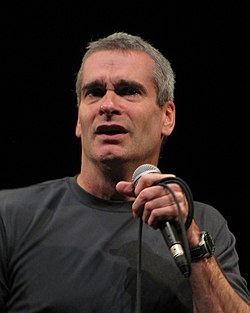
Henry Rollins seems to be following me through every stage in my life. First, in middle school, the moment I spied an incredibly tall eighth grader with spiked hair and a "Black Flag Roach Motel" t-shirt was the moment that I realized that the age of ELO and bland suburban innocence was over.
When I was a rock critic, I was sent to review one of his stand-up routines (I was unimpressed).

These days, I'm viewing Rollins as one of the reasons to love Los Angeles. His KCRW radio show is the best thing on air and I am both shocked and relieved that it's still on.

Now, in this LA Weekly column, he pops up as a passionate supporter of libraries and librarians.

No longer tethered to a space, a library is still a sacred haven for certain kids -- the ones who don't fit in, are bullied, and are seeking a sign that, one day, things will be different.

Here's Rollins on his own experience:

"I preferred books over people. They didn't beat me up or take my bike. There was something very empowering about walking into the building, past all the adults, and realizing that I could pull down any book I wanted to and just start reading. I don't know why but it was a huge deal to me."

I know why -- the library is an offering of what is out there in the world, and it's a chance for confused, alienated kids to take that piece of the outside world and bring it in. It's a chance to have a choice about what they experience.

In the conversations about why libraries matter, the idea of the place as a safe haven or sacred space for kids who need one the most rarely comes up because we have moved beyond the limitations of brick and mortar. The kids in the library know that, quite often, it's still a library's most important role.

Saturday, September 21, 2013

Amish approach to technology

This NPR story about the Amish and technological advances aired a while ago, but it keeps coming back to me again and again when I talk to people about technology and how it impacts our culture. So the Amish aren't necessarily anti-tech, but they think long and hard about how technology might impact the community and the culture? What a concept. Maybe we should rethink our slavish approach to tech changes.


Diane Ravitch says schools need librarians!

Sometimes Diane Ravitch sounds like the only voice of reason rising out of heated debate over public education. Recently, I interviewed Ravitch for Salon about charters, vouchers, Big Data, Teach for America and her new book, Reign of Error.

Here's one section of the interview that didn't make it into the Salon piece -- Ravitch on school librarians:

DMO: Since I am a public school librarian, I do have to ask about libraries. A lot of people have lost faith in libraries and they say that everybody can just Google everything anyway and so we don't need libraries. You do think we need librarians, and I'm wondering why?

Diane Ravitch: Well, I've always been a supporter of librarians and libraries because I think that libraries are the place where you learn how to use information. You learn how to use information in the classroom, but librarians are skilled — and much more so than when I was in school — in teaching you how to access information and provide tremendous resources.

I love the idea that you can go into a library and I have to say I still like books, no matter how much technology I use, no matter how many times I go to the Internet. I think that some of the most important learning experiences for me personally came from browsing in the library and finding unexpected things, and you don't find too many unexpected things on the Internet – you find what you look for. In the library, you can find things you didn't know you were looking for.

I think libraries are important because librarians are skilled in technology – they don't just file books away, they teach kids how to use the technology and how to use it responsibly.

Thursday, August 15, 2013

Gen X's midlife meltdown

The reason for the long absence? This Salon article: Generation X gets really old: How do slackers have a midlife crisis? The piece is an examination of the elements -- some economic, some cultural -- that make Xers at midlife different from other recent generations. The state of X? We just can't get a break, can we? Maybe we can make an example of ourselves.


I'll be on WBEZ in Chicago tomorrow morning at 10:20 Central Time talking about the story.